
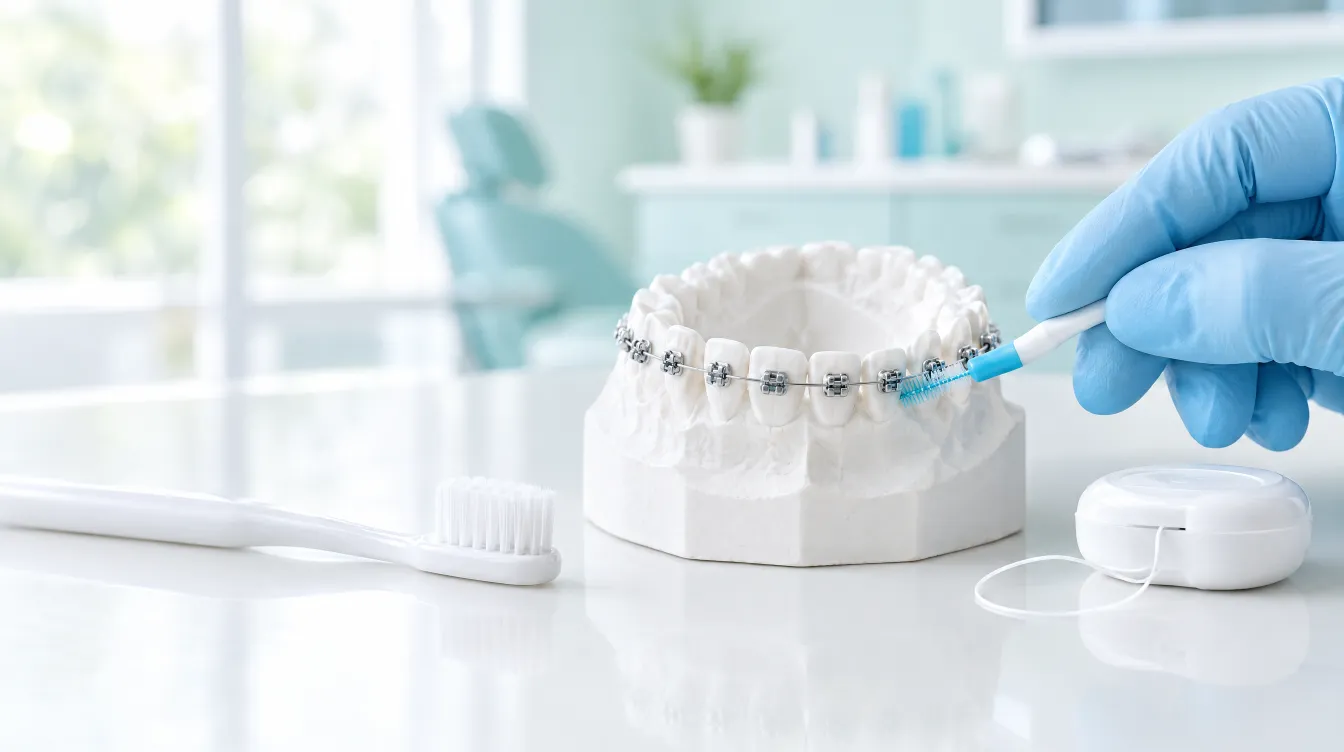
Why hygiene is crucial during orthodontic treatment
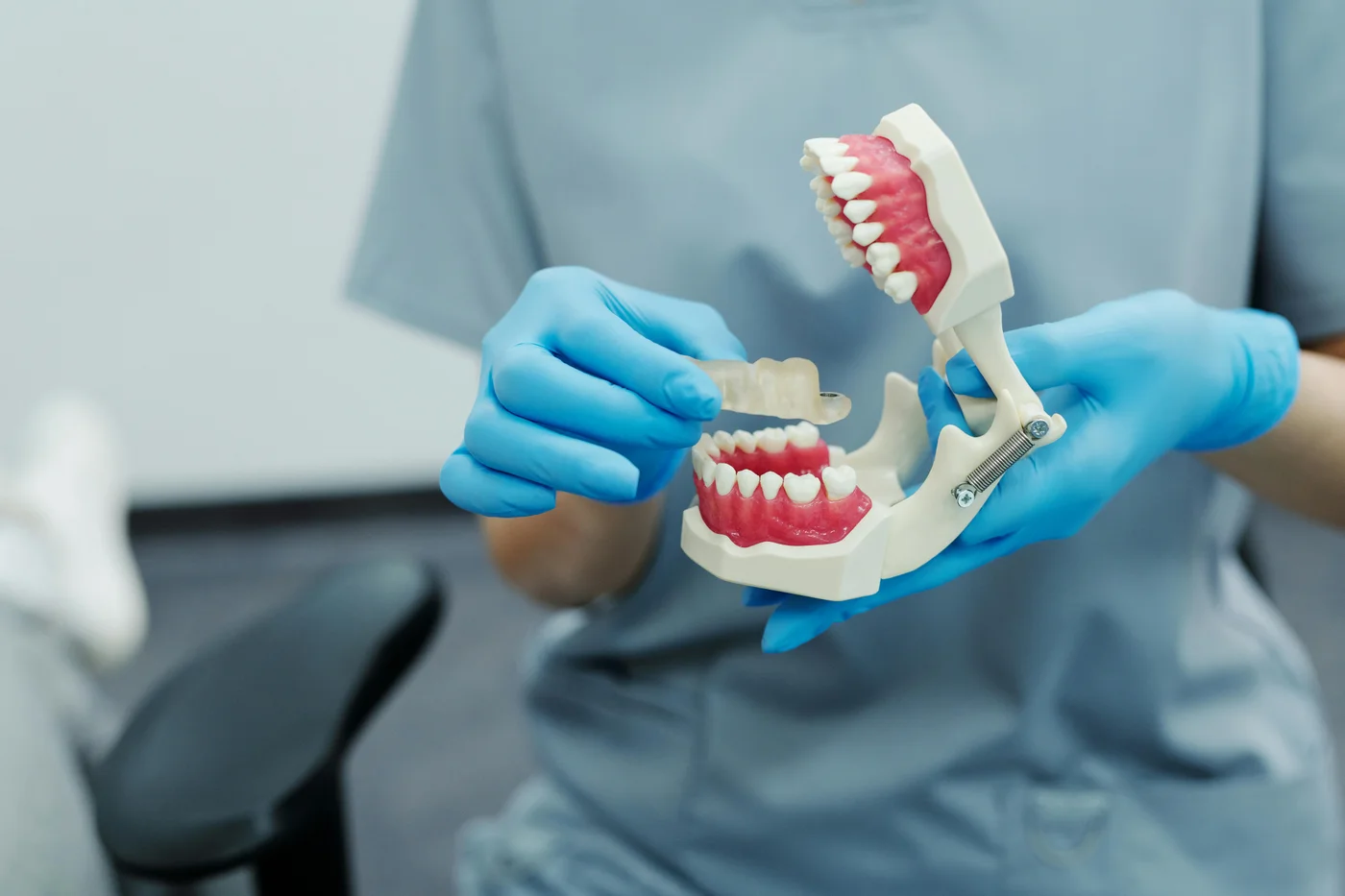
Increased risk of tooth decay and demineralisation
Appliances make routine cleaning more difficult and promote the formation of bacterial plaque. Acids produced by bacteria can attack the enamel and cause demineralisation (white spots) or tooth decay around the brackets.
Gum inflammation (gingivitis)
Plaque building up around the gums can lead to red, swollen and bleeding gums. Untreated gingivitis can progress to periodontitis, a more serious disease that damages the supporting apparatus of the teeth.
Halitosis (bad breath)
Trapped food debris and plaque contribute to unpleasant breath.
Putting the final result at risk
Poor hygiene may be a reason for removing the braces early so that the ongoing pathological conditions can be treated.
The role of the dental hygienist
Personalised instructions
The hygienist gives precise instructions on the most suitable techniques and tools (orthodontic toothbrushes, interdental brushes, special dental floss, oral irrigators) for proper hygiene at home.
Professional dental hygiene
They carry out regular and thorough cleaning to remove tartar and plaque from areas that are difficult to reach during daily care.
Monitoring
They continuously check the health of the teeth and gums in order to detect any problems early.
In short, orthodontics and dental hygiene depend on each other: only by maintaining optimal oral health throughout the treatment can the best results be achieved, ensuring a beautiful and, above all, healthy smile.
More information for patients
Treatment process and guidance ↗
Treatment costs and insurance ↗
Source: MySmile